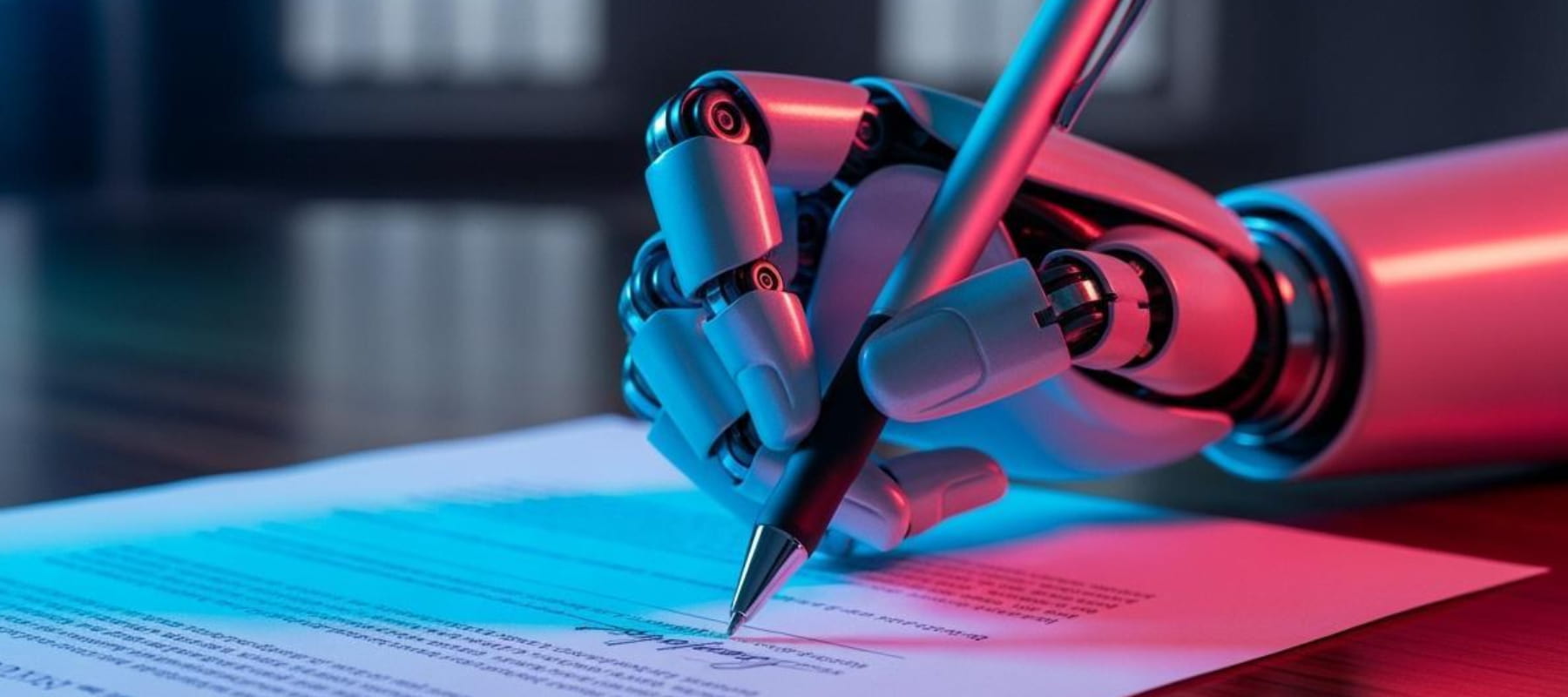
Just over half of the 2,000 UK adults surveyed for The National Wills Report 2026, published by The National Will Register, said they would be happy for artificial intelligence to play some part in writing their own Will. Most would still want a professional to look over the result, but around one in ten said they would be comfortable leaving the entire process to AI.
It is not hard to see why. Making a Will is something many people put off for years, and a tool that produces a polished, professional-looking document in minutes, for little or no cost, removes much of the effort and expense that holds them back. The trouble is that a Will can look entirely convincing and still be badly wrong, and nobody may find out until it is far too late to fix.
For probate lawyers, that is where the real concern lies. Mistakes in Wills tend to surface only after the person who made them has died, at the point when they can no longer explain what they meant or put things right. By then, a document that seemed perfectly sensible when it was printed off at home can leave a surviving partner unsure whether they can stay in the family home, or turn brothers and sisters against one another over what their parent really wanted. What began as a quick and inexpensive alternative to professional advice can end with the very people it was meant to protect caught up in costly and emotionally draining litigation.
A convincing document can hide serious problems
Part of the danger lies in how persuasive AI-generated wording can be. It reads fluently and sounds authoritative, so it is easy to assume it must be right. Yet the tool producing it knows nothing about the person’s family or finances beyond what it has been told, and it will not necessarily ask the follow-up questions an experienced adviser would ask as a matter of course. This can lead to critical mistakes, like leaving the family home to one child when the house is in fact owned as a beneficial joint tenancy and will pass automatically to the surviving joint owner, regardless of what the Will might say. Another common problem is including insufficiently detailed or considered survivorship clauses, which might cause part of an estate to pass under the intestacy rules instead of to the Deceased’s intended beneficiaries. More egregious errors that tend to crop up in AI wills are the use of terminology from another jurisdiction with no validity or settled meaning here, which can also defeat the testator’s intentions and deprive their beneficiaries.
Problems like these are unlikely to be noticed when the Will is made. They tend to come to light later, as questions about what the person really meant, and while those questions remain unanswered the executors may be unable to distribute the estate. The court does have powers to interpret a Will and, in limited circumstances, to correct it, but it will not rewrite a Will simply because the result seems unfair or differs from what the family believes their relative wanted. Proving what the person actually intended can be a lengthy process involving complex evidence and considerable expense and stress. And, as with all litigation, there is no guarantee of success at the end of it.
Even well-chosen words can be undone at the signing. In England and Wales, a Will must be signed and witnessed in a particular way, and one signed electronically or witnessed over a video call is not currently valid. An AI tool can explain the rules, but it will not be in the room to make sure they are followed. Nor will it assess testamentary capacity in the same way a solicitor can, protecting against future challenges to the will’s validity. As it is not currently possible to have an AI in the room overseeing signing, AI will not prevent beneficiary, or a beneficiary’s spouse or civil partner from witnessing a will and thereby invalidating their gift. Asking a son or daughter to witness a parent’s Will can feel like the most natural thing in the world, and it is exactly the kind of mistake that cannot be undone once the parent has died.
When a Will fails altogether, the consequences can be stark. An earlier valid Will may take effect instead, reflecting circumstances and wishes that may have long since changed. If there is no earlier Will, the estate passes under the intestacy rules, which make no provision at all for an unmarried partner, however long the couple had been together. The person the deceased most wanted to look after could be left with substantially less, or with nothing.
When the Will may not reflect the person’s wishes
Some of the hardest disputes have little to do with the wording of a Will and everything to do with how it came to be made. Imagine an elderly father who asks his daughter to help him write his Will using AI. She sits with him, types up a document in line with his instructions, tidies up the wording, prints it out and asks two neighbours to come round and witness his signature. It all feels sensible and kind. When he dies, though, her brothers find that she has been left considerably more than they have.
There may be a perfectly innocent explanation. Perhaps she cared for him in his final years, or he simply felt she needed the help more. Her brothers may see it differently, and start to ask whether their father had the mental capacity to make a Will, whether he really understood what it said, and whether their sister steered his instructions or put him under pressure. Each of those questions is a recognised basis for challenging a Will. Depending on the circumstances, her close involvement in preparing a Will from which she benefits could be enough to raise the court’s suspicion, and she may then need to show that her father knew and approved what he signed. If the court is not satisfied, the Will fails, however good her intentions were.
This is precisely the gap a professional fills. An AI tool cannot assess someone’s capacity in the way a qualified professional can, nor so well placed to assess whether the person typing is the person whose Will it is, or whether they are acting freely. A solicitor’s involvement does not make a Will immune from challenge, but an independent adviser is in a position to notice when instructions seem out of character, take time to speak to the person alone, arrange a medical assessment if capacity may be in doubt, and keep a careful note of it all.
When a Will is challenged, who can explain what happened?
In a dispute like that, the question everyone wants answered is how the Will came about. Where a solicitor prepared it, they can be asked for a detailed account of who gave the instructions, who was present, what advice was given and how the Will was signed. This is often called a Larke v Nugus request, after the case that established the practice, and the answers can do a great deal to clarify what happened, sometimes settling concerns before anyone needs to go to court.
With an AI-generated Will, there may be no one to ask. A chat history might show what was typed and what the tool produced, but it cannot show who was doing the typing, whether anyone else was influencing them, or whether the person whose Will it was understood the finished document. It may be impossible to tell whether the version that was signed is the one they approved, and by the time a dispute arises the history may well have been deleted or be locked in an account the executors cannot open. Families are left piecing together conversations from months or years before, and the chance to create a reliable record at the time has gone for good.
The inheritance claims AI may not anticipate
Even when an AI-generated Will is valid and says exactly what the person asked for, that can be a problem. AI tools are designed to carry out instructions, so a request to leave everything to one child will produce a neatly drafted Will that does just that, with no hint that anything might be amiss. What the tool may fail to explore is whether a surviving spouse, qualifying cohabiting partner, child or financially dependent relative could bring a claim under the Inheritance (Provision for Family and Dependants) Act 1975, which allows them to ask the court for reasonable financial provision from the estate. A solicitor given the same instructions would want to understand the wider family picture before drafting anything, explain where a claim might come from and help the person set down their reasons, which the court can take into account later. Without that conversation, the instructions are followed to the letter, and the people the Will was meant to benefit may find themselves defending a claim that could have been anticipated, and perhaps avoided, while the person was still alive.
The real cost emerges after death
The saving on professional fees is usually what makes an AI-written Will attractive in the first place, but it can quickly look insignificant once a dispute begins. Working out whether a Will is valid, arguing over what it means or answering an allegation of undue influence can involve gathering evidence, taking legal advice and, in some cases, going to court. All the while, the estate may sit unresolved for months or even years. Beneficiaries may be unable to access money they were counting on, and relationships between family members can be damaged beyond repair.
The cost can also come out of the inheritance itself. Although the losing party in litigation usually pays, the court can order that costs be paid from the estate where the deceased’s own conduct, including the way the Will was made, gave rise to the dispute. In practice, that can mean the inheritance funding the very argument over who should receive it. When a solicitor gets a Will wrong through negligence, disappointed beneficiaries may at least have a claim backed by professional indemnity insurance. With an AI-generated Will, any remedy against the provider is far less certain and will depend on the service, its terms and the circumstances, so the family may be left to bear both the mistake and the cost of putting it right.
Acting before a dispute arises
AI can produce a Will in minutes, but a document is not the same as a Will that truly reflects someone’s wishes, meets the legal requirements and will stand up to scrutiny after their death. Anyone who has already made a Will with the help of AI can have it reviewed and, if necessary, properly signed again, dealing with many of these risks while there is still time. For families who discover an AI-drafted Will after a death, it pays to act quickly. A caveat can be entered to stop a grant of probate while concerns are looked into, and a claim under the 1975 Act must normally be brought within six months of the grant.
The true consequences of a poorly drafted Will often emerge only after death, when the person who made it can no longer answer questions about what they intended. By then, the cost of discovering that an AI-generated document was inadequate may fall entirely on the family left behind.
Buckles Law’s contentious probate team advises executors, beneficiaries and families where the validity or meaning of a Will is in question, including Wills prepared with AI or without professional advice. If you have concerns about how a Will was made, early advice can help protect your position, so please get in touch.